
Vein Treatment Options Side by Side
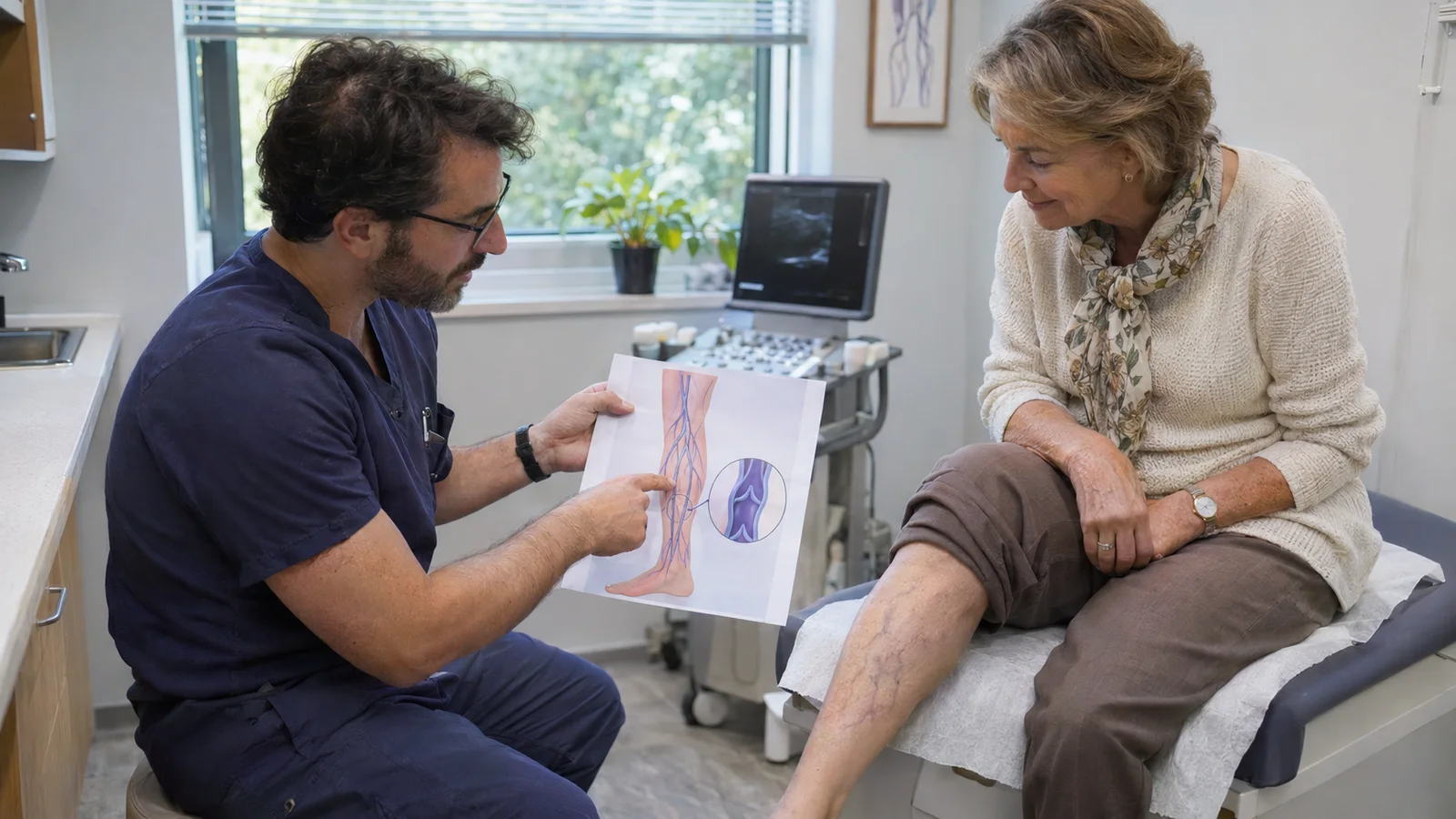
Venous disease treatments are the ways a clinician can address a problem in the veins, and which one fits is not a call a reader can make from a page. This journal compares the options so you arrive at the appointment with better questions, not a decision already made.
my.clevelandclinic.org states: "If you have venous disease, your healthcare provider may recommend treatment to help you avoid potentially serious complications." Note who does the recommending in that sentence. It is the provider, after an examination.
What you can judge and what you cannot
You can judge whether a symptom is bothering you enough to raise it. You can also judge whether you understand the words a provider uses. You cannot judge from home which treatment suits your veins, or whether you need one.
The MedlinePlus Medical Encyclopedia entry on venous insufficiency is a neutral place to learn the condition's name and vocabulary. The Society for Vascular Surgery page on chronic venous insufficiency gives a specialist society's account of the same ground.
Reading the options as a cautious reader
One family of options is catheter-based. As my.clevelandclinic.org puts it: "With catheter-based treatments, your provider uses a catheter (thin tube) to provide treatment."
That sentence puts the procedure in the provider's hands. For one such treatment, the Cleveland Clinic page on endovenous ablation lists procedure details and recovery, and it is worth reading before you ask what a recommendation involves.
The question to bring to your appointment
If you are in Tinley Park, Illinois, and treatment has come up, ask which option is being recommended and why that one. Ask what the provider would do if you chose to wait, and what you should watch for in the meantime.